Nations on edge as fears of global war grow
The danger of World War 3 is growing — leaders must choose peace
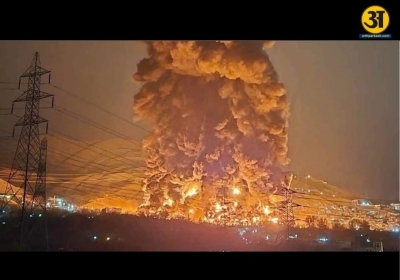
As someone who closely follows global affairs, I can say without doubt that the world today feels more dangerous than ever before. The signs of a potential Third World War are becoming more visible every day. Conflicts are rising in every corner — South Asia, Europe, the Middle East, and Asia-Pacific. What worries me the most is that many of the countries involved have nuclear weapons. If these tensions spin out of control, we could face destruction on a global scale.
Let’s take South Asia first. The recent terror attack in Pahalgam, Kashmir, which killed 26 civilians, triggered one of the worst military crises between India and Pakistan in decades. For four days in May 2025, both nuclear-armed nations carried out intense military operations. India conducted precision strikes deep inside Pakistan, while Pakistan struggled with its air defence. The world watched nervously as two rivals came dangerously close to war. Although the crisis ended through diplomatic talks, the region remains fragile. This conflict showed how quickly things can go wrong — and how misinformation and rumours can make things worse.
In Europe, the Russia-Ukraine war continues in its fourth year. Despite several attempts to start peace talks, nothing concrete has happened. The US, under Donald Trump’s leadership, has tried to play peacekeeper but without much success. Meanwhile, China seems happy to stay quiet, possibly because a distracted Europe helps its own interests. If the US steps back from trying to resolve the war, China might step in — and that will change the global power balance even more. NATO and the EU are already on edge.
Another worrying point is the China-US tension over Taiwan. China has been aggressive in claiming Taiwan, while the US is determined to support the island. Any military action here could lead to a major war in Asia. North Korea’s frequent missile and nuclear tests add more fuel to this fire. With both Japan and South Korea being US allies, the chances of a regional conflict turning global are very real.
Middle East, AI, and climate: new threats to world peace
The Middle East has always been a hotspot, but things are especially tense now. Israel recently launched airstrikes on Iran, killing top military leaders. Iran retaliated with attacks on Israeli bases. This back-and-forth violence has created a dangerous cycle. Many believe that Israel, with US support, may want to remove the Iranian government. If that happens, a country of over 90 million people could fall into chaos. The result? A massive refugee crisis and total instability across the region.
Iran is already dealing with internal problems—economic struggles, public anger over lack of freedom, and rising support for opposition groups like the exiled Crown Prince Reza Pahlavi and the MEK. But if it continues to attack Israel, it could invite more strikes in return. And while Iran might not want to fight the US directly, continued conflict will only push the region further into disaster.
ALSO READ: Political unity or power pact? Inside India’s most enduring political alliances
ALSO READ: India holds strategic cards as Trump’s rhetoric escalates
Then there’s the role of Artificial Intelligence and Climate Change—two issues that rarely come up in war discussions but now pose serious threats. AI-powered weapons, misinformation campaigns, and hacking tools are making conflicts more unpredictable. Climate change is already causing resource shortages, mass migration, and natural disasters. These factors can easily spark or escalate wars in vulnerable regions.
What makes all of this scarier is that most of these countries—India, Pakistan, Russia, the US, China, North Korea, and Israel—have nuclear power. If even one miscalculation happens, it could lead to a chain reaction no one can stop. The recent conflicts show how military actions now come with more speed, precision, and danger than ever before.
Final thoughts
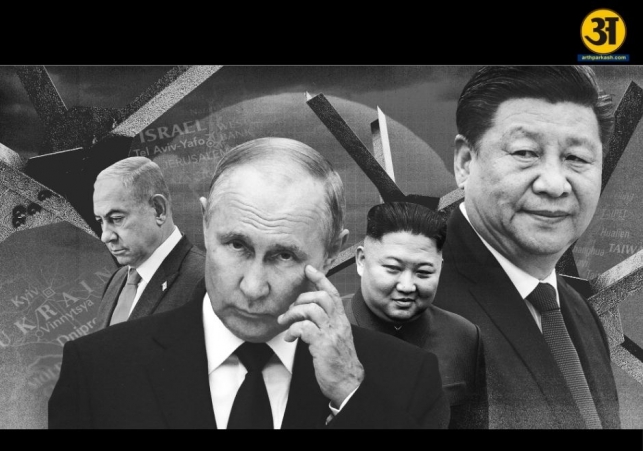
The world today feels like it is standing on the edge of a cliff. One wrong move by any leader could trigger something terrible. What makes it even more dangerous is that many of these global powers have unpredictable leadership, personal rivalries, and fragile egos. Whether it’s Trump, Putin, Xi, or Kim Jong Un, their decisions affect billions of people.
I still believe there is hope. Despite all the conflict, the majority of people around the world don’t want war. Any escalatory war will still need public support—and that is not guaranteed. Most citizens, whether in Iran, India, the US, or Russia, simply want peace, progress, and safety for their families. World leaders must listen to their people instead of chasing their own power games.
Peace is hard, but war is deadly. The time to step back and talk is now—before it’s too late.
Related News